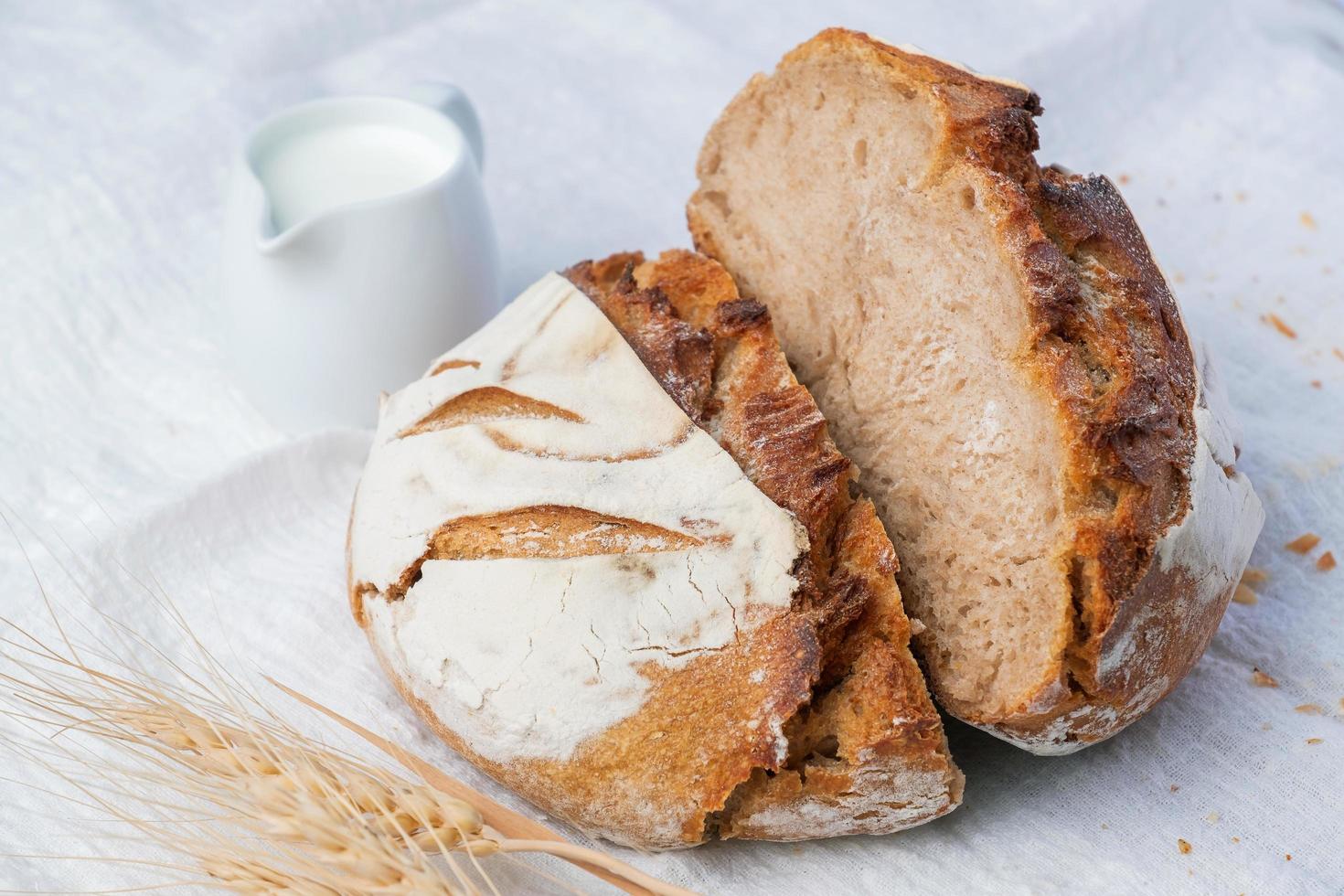
Is Homemade Sourdough Bread Gluten Free?

Is Homemade Sourdough Bread Gluten Free?

Homemade sourdough bread is typically not gluten-free, as it is usually made with wheat flour which contains gluten. While the fermentation process in sourdough can break down some of the gluten, making it easier for some people with gluten sensitivities to digest, it still contains enough gluten to be unsafe for those with celiac disease or severe gluten intolerance.

TL;DR

Homemade sourdough bread is typically not gluten-free, as it is usually made with wheat flour which contains gluten. While the fermentation process in sourdough can break down some of the gluten, making it easier for some people with gluten sensitivities to digest, it still contains enough gluten to be unsafe for those with celiac disease or severe gluten intolerance.

Quick Tips

1

Easier to digest: The fermentation process breaks down gluten, making it easier for some people to digest compared to regular bread.

2

Lower glycemic index: Sourdough bread has a lower glycemic index than regular bread, which means it causes a slower, more gradual rise in blood sugar.

3

Improved nutrient absorption: The fermentation process increases the bioavailability of nutrients like folate, iron, and zinc.

# In Diesem Artikel

3 Abschnitte

Schnelle Navigation zu jedem Abschnitt dieses Artikels:

1 Benefits of Homemade Sourdough Bread

Easier to digest: The fermentation process breaks down gluten, making it easier for some people to digest compared to regular bread.

Springe
2 Who should avoid Homemade Sourdough Bread

Individuals with celiac disease: While sourdough fermentation can reduce gluten content, it doesn’t eliminate it entirely, making it unsafe for those with celiac disease.

Springe
3 Gluten Free Alternatives

Here are five gluten-free alternatives to homemade sourdough bread, along with short descriptions:

Springe

Benefits of Homemade Sourdough Bread

Benefits of Homemade Sourdough Bread
Easier to digest: The fermentation process breaks down gluten, making it easier for some people to digest compared to regular bread.
Lower glycemic index: Sourdough bread has a lower glycemic index than regular bread, which means it causes a slower, more gradual rise in blood sugar.
Improved nutrient absorption: The fermentation process increases the bioavailability of nutrients like folate, iron, and zinc.
Prebiotic properties: Sourdough contains prebiotic fibers that feed beneficial gut bacteria, promoting better digestive health.
Reduced phytic acid: Fermentation reduces phytic acid levels, which can interfere with mineral absorption.
Potential probiotic benefits: Some sourdough breads may contain live probiotics, depending on the baking process.
Lower in FODMAPs: Sourdough bread is often lower in FODMAPs, making it more suitable for people with IBS or FODMAP sensitivities.
No additives: Homemade sourdough typically doesn’t contain preservatives or additives found in commercial breads.
Potential antioxidant properties: The fermentation process may increase antioxidant levels in the bread.
Better flavor and texture: While not strictly a health benefit, the improved taste and texture may encourage people to eat bread in moderation as part of a balanced diet.Remember that while sourdough bread offers these potential benefits, it should still be consumed in moderation as part of a balanced diet.

Who should avoid Homemade Sourdough Bread

Who should avoid Homemade Sourdough Bread
Individuals with celiac disease: While sourdough fermentation can reduce gluten content, it doesn’t eliminate it entirely, making it unsafe for those with celiac disease.
People with non-celiac gluten sensitivity: They may still experience symptoms from the remaining gluten in sourdough bread.
Individuals on a low-carb or ketogenic diet: Sourdough bread is still high in carbohydrates.
Those with yeast allergies: Sourdough bread contains wild yeast, which may trigger allergic reactions in sensitive individuals.
People with severe wheat allergies: Sourdough bread is typically made with wheat flour.
Individuals following a low FODMAP diet: Sourdough bread may still contain FODMAPs, which can trigger digestive issues in some people.
Those with diabetes or blood sugar concerns: While sourdough bread has a lower glycemic index than regular bread, it can still affect blood sugar levels.
People with specific dietary restrictions: Such as those following a paleo or grain-free diet.
Individuals with certain gastrointestinal conditions: Some may find sourdough difficult to digest.
Those with candida overgrowth: The yeast in sourdough might exacerbate symptoms in some cases.Remember, it’s always best to consult with a healthcare professional or registered dietitian for personalized advice regarding dietary restrictions or concerns.
GENIESSE DEIN LIEBLINGSESSEN OHNE ANGST!
Lass dich von Gluten nicht aufhalten. Nimm Anti-Gluten-Pillen vor deiner Mahlzeit und genieße mit Seelenfrieden.
ANTI-GLUTEN-PILLEN KAUFEN
Klinisch erwiesen · Bis zu 86% Glutenreduktion · Schnell wirkend

Gluten Free Alternatives

Here are five gluten-free alternatives to homemade sourdough bread, along with short descriptions:

Gluten Free Alternatives
Almond Flour Bread:A dense, moist bread made primarily from almond flour. It's high in protein and healthy fats, with a slightly nutty flavor. This bread is popular among those following low-carb or keto diets.
Buckwheat Bread:Despite its name, buckwheat is not related to wheat and is naturally gluten-free. This bread has a robust, earthy flavor and is rich in nutrients like fiber and minerals. It often has a darker color and denser texture than traditional wheat bread.
Coconut Flour Bread:Made from finely ground coconut meat, this bread is high in fiber and low in carbohydrates. It has a slightly sweet, coconut flavor and tends to be more moist than other gluten-free breads.
Quinoa Bread:Quinoa is a protein-rich pseudocereal that makes an excellent base for gluten-free bread. This bread often has a light, fluffy texture and a slightly nutty flavor. It's also high in essential amino acids and minerals.
Cassava Flour Bread:Made from the root of the cassava plant, this bread has a neutral flavor and texture similar to wheat bread. It's grain-free and nut-free, making it suitable for those with multiple food sensitivities. Cassava flour is also high in resistant starch, which can benefit gut health.

Health Information

? Häufig Gestellte Fragen

3 Fragen
1 Does homemade sourdough bread have gluten?
Yes, homemade sourdough bread typically contains gluten. Sourdough is usually made with wheat flour, which naturally contains gluten proteins. The fermentation process in sourdough can break down some of the gluten, but it doesn't eliminate it entirely. People with celiac disease or gluten sensitivity should still avoid traditional sourdough bread made with wheat flour.
2 What bread is naturally gluten-free?
Rice bread is naturally gluten-free. Corn bread made with 100% cornmeal is also gluten-free. Breads made from alternative flours like almond, coconut, or quinoa are gluten-free options. Sourdough bread made from gluten-free grains can be a tasty gluten-free choice.
3 Can you get gluten-free sourdough?
Yes, you can get gluten-free sourdough bread. It is made using gluten-free flours like rice, sorghum, or buckwheat instead of wheat flour. The fermentation process is similar to traditional sourdough, using wild yeast and bacteria cultures. While the texture and flavor may differ slightly from wheat-based sourdough, many people find gluten-free sourdough to be a satisfying alternative.
LEBE GLUTENFREI OHNE AUFWAND!
Entdecke Tolerase® G, klinisch erwiesen, bis zu 86% des Glutens in unter 10 Minuten abzubauen. Erlebe die Freiheit zu essen, was du liebst.
ANTI-GLUTEN-PILLEN KAUFEN
150mg reines Tolerase® G · Reduziert Gluten um 86% · Unter 10 Minuten

Unsere Expertin

Drs. Ilse van Asperen, Orthomolecular Therapist and Nutritional Coach

Drs. Ilse van Asperen

Orthomolekulare Therapeutin, Ernährungscoach & Professionelle Redakteurin

Drs. Ilse van Asperen ist Ärztin und spezialisiert auf orthomolekulare Therapie und Ernährungscoaching. Mit einem Hintergrund in öffentlicher und klinischer Gesundheitsforschung sowie Management konzentriert sie sich darauf, die Ursachen von Gesundheitsproblemen durch Ernährung, Darmgesundheit und Stressreduktion anzugehen. Als professionelle Redakteurin für Little Helpers prüft sie alle glutenfreien Inhalte auf Genauigkeit, Sicherheit und wissenschaftliche Glaubwürdigkeit. Mehr auf der eigenen Website von Drs. Ilse van Asperen lesen

Unsere Quellen

Die Informationen auf dieser Seite basieren auf renommierten Gesundheits- und Ernährungsorganisationen und bieten dadurch hohe Genauigkeit und Zuverlässigkeit für alle, die sich glutenfrei ernähren. Weitere Details finden Sie in den folgenden Quellen.
Quellen

Ähnliche Artikel

Zurück zum Blog